
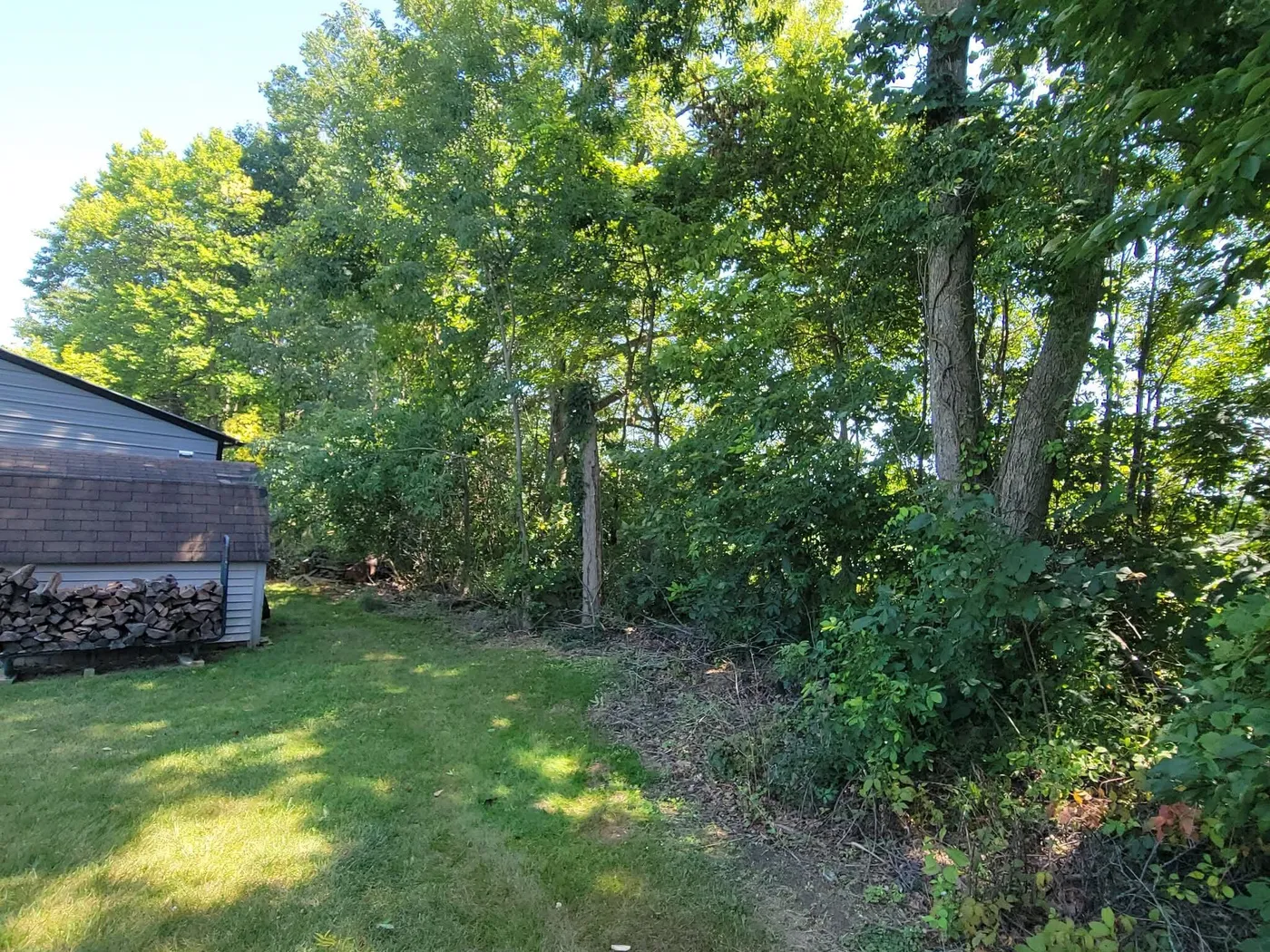
Do you need a permit to clear land in Ohio?
It depends on the whole project. A project that disturbs an acre or more of ground needs Ohio EPA’s stormwater permit. So does part of a larger plan that will. Streams and wetlands can bring in the Army Corps and Ohio EPA. A county can add its own permit. Each agency decides, so ask before work starts.
This guide is general information, not legal advice. It covers what can trigger a permit before land clearing on your property and who to ask. The agency named for each trigger has the final word.
What can trigger a permit before you clear land in Ohio?
Six situations call for a check before clearing. The first two are disturbing an acre or more of ground and a stream or wetland in the work area. Next come a county permit program and tree cutting from April 1 to September 30 on a development project. The last two are the property line and a new house.
| Situation | Who to ask | What the rule says |
|---|---|---|
| A project disturbs one or more acres, or is part of a larger common plan that will | Ohio EPA | A stormwater discharge permit: a SWP3, an NOI at least 21 days ahead in most of Ohio, then the approval letter |
| A stream, lake or wetland in or near the work | U.S. Army Corps of Engineers and Ohio EPA’s 401/Isolated Wetlands Group | Their permits may be needed even when no stormwater permit is |
| A county with its own earth-disturbing permit | Your county (in Warren County, its soil and water conservation district) | Warren County requires one for any project expected to disturb an acre or more |
| Tree clearing from April 1 to September 30 on a development project | ODNR Division of Wildlife and the U.S. Fish and Wildlife Service Ohio Field Office | Coordinate with both first; native bats roost and raise young in trees then |
| Cutting near a property line | A surveyor, to mark the line | Reckless cutting on another person’s land without privilege brings treble damages (ORC 901.51) |
| A house going up after the clearing | The local zoning office | Township zoning has no power to prohibit farm use of land (ORC 519.21), with exceptions; a house is a separate question |
When does Ohio EPA’s stormwater permit apply?
Ohio EPA says a project that disturbs one or more acres of ground needs a stormwater discharge permit. So does part of a larger common plan of development or sale that will disturb an acre or more. Its permit counts clearing, grading, excavating, grubbing and filling that disturb an acre or more as construction activity.
Coverage starts with three steps, in order. A Stormwater Pollution Prevention Plan, called a SWP3, comes first. A Notice of Intent, or NOI, asks for coverage under the general permit. Then Ohio EPA’s approval letter must arrive before construction.
In most of Ohio, the plan must be ready and the NOI and fee filed at least 21 days ahead. Sites in the Big Darby Creek watershed and parts of the Olentangy River watershed need 45 days.
Ohio EPA’s fee table lists $200 for an NOI covering 1 to 5.99 disturbed acres. The fee tops out at $500 for 20 acres and up. The rule itself goes back to March 10, 2003, for construction sites disturbing an acre or more.
Buying a lot in a new subdivision? The lot can carry duties under the developer’s permit. If the developer’s duties end at the sale, the permit says the developer must tell the buyer what it requires. Ohio EPA decides whether your own project needs coverage.
Is clearing the same as grubbing or grading?
No, and the difference shows up in the soil. The Warren County Soil and Water Conservation District calls clearing the cutting and removal of trees, brush and other material above ground. Grubbing removes roots, stumps and other material below the existing grade. Pulling trees out by the root ball results in land disturbance and exposed soil.
Forestry mulching works on the clearing side of that line. The mulching head grinds brush and small trees where they stand. Roots and topsoil stay in place under a layer of chips. That disturbs far less soil than dozing and grubbing.
Less soil disturbed is not the same as no permit. Ohio EPA’s permit defines disturbance as clearing, grading, excavating, filling or other change to the land surface. It covers work where cover is destroyed in a way that exposes the underlying soils. How that reads on your site is the agency’s call.
| Method | What happens to roots and soil | Do we do it |
|---|---|---|
| Forestry mulching | Brush and small trees are ground into chips where they stood; roots and topsoil stay under the chips | Yes |
| Brush hogging | A heavy rotary cutter cuts growth above the ground; roots and soil stay in place | Yes |
| Hand cutting with chainsaws | Stems are cut by hand, such as along a fence that stays; roots stay in the ground | Yes |
| Grubbing or digging out stumps | Roots and stumps come out from below grade; pulling the root ball leaves exposed soil | No |
| Grading or excavation | Soil is cut, moved or filled to reshape the ground | No |
| Burning brush piles | Cut brush is piled and burned | No |
| Hauling brush off | Cut brush is loaded and taken off the property | No |
Stumps from the stems we mulch end up 1 to 2 inches below grade, low enough to mow over. When a foundation needs stumps pulled, that is excavation work, and it counts in the permit picture too. Burning the brush afterward has its own state rules, covered in our guide to Ohio open burning rules.
Do streams and wetlands need their own permits?
They can, even when no stormwater permit applies. Ohio EPA says such a project may still need permits from the U.S. Army Corps of Engineers and Ohio EPA’s 401/Isolated Wetlands Group. Placing dredged or fill material into waters of the United States needs a Corps permit and a state water quality certification.
That rule covers private land as well as public land. Filling an isolated wetland in Ohio also takes an Isolated Wetland Permit from Ohio EPA.
Near the water, Ohio EPA’s construction permit calls for a 50-foot undisturbed natural buffer around surface waters, if feasible. The buffer is measured from the ordinary high water mark. Ohio EPA strongly recommends 50-foot buffers around surface waters, wetlands included.
If a creek, a lake edge or wet ground sits in the work area, ask those agencies first. Keeper trees get flagged and worked around, and a strip along the water can be kept the same way.
Does your county have its own clearing permit?
It depends on the county. In Warren County, an Earth Disturbing Permit is required for any project expected to disturb an acre or more. The county’s soil and water conservation district runs it. That is one county’s program, not a rule for north central Ohio, so ask your own county.
Warren’s district asks the question plainly: “I’m just clearing. Do I need a permit?” For an acre or more in that county, its answer is likely yes. For its permit, it does not matter whether the vegetation grew naturally or was planted on purpose.
The district’s concern is scale. An acre or more of tree clearing can leave a lot of disturbed soil for rain to wash off. Before a large job, ask the county offices where your land sits whether a local program applies.
Does bat season limit tree clearing in Ohio?
On development projects, it can. Warren County’s soil and water district says tree clearing must not occur from April 1 to September 30 without coordination. The offices to call are ODNR’s Division of Wildlife and the U.S. Fish and Wildlife Service Ohio Field Office. Native bats roost and raise young in trees then.
The Indiana bat and the northern long-eared bat are federally endangered species in Ohio. For tree clearing in that window, ODNR and the Fish and Wildlife Service will recommend bat surveys.
Planning tree work for the cold months keeps it outside that window. Frozen or dry ground carries our tracked machine cleanly, too. Our post on the best time of year to clear covers the winter window.
Can you clear brush right up to the property line?
Find the line first. Ohio law, ORC 901.51, covers cutting on land that is not yours. Without privilege, no one may recklessly cut or injure a tree, sapling, shrub, bush, vine or crop there. Public land is covered too. A violator is liable for treble damages, three times the injury, on top of a criminal penalty.
A survey marks the line. Have it marked before the estimate, so everyone can see where the work stops.
Fence rows need the same care. Our guide to Ohio line fence law covers who keeps them clear. Along a fence that stays, our crew cuts the growth off the wire by hand with chainsaws.
Where does township zoning come in?
Township zoning has limited power over farm use. ORC 519.21 gives township zoning no power to prohibit the use of any land for agricultural purposes. The law lists exceptions. A house is a separate question. If one is part of the plan, call the local zoning office before you build.
One exception matters for small lots. In some subdivisions, township zoning can regulate agriculture on lots of one acre or less.
For a homesite, our lot clearing takes out the brush and small trees ahead of the build. The dig for the foundation is excavation work, which we do not do. Our guide to clearing a wooded lot to build a house lays out that order of work.
Who should you call before clearing starts?
Call the office that matches each trigger. Ohio EPA handles the stormwater permit. The Army Corps and Ohio EPA’s 401/Isolated Wetlands Group handle streams and wetlands. Your county answers for any local permit. ODNR and the Fish and Wildlife Service handle bat season, and the local zoning office handles a new house.
Make those calls before work starts. Our written price and timeline hold unless the scope changes, and an agency’s answer can change it. That is why the calls come first.
Then our land clearing service turns the brush and small trees into chips where they stand. Nothing is burned, piled or hauled off the property, and topsoil and roots stay in place. We are a four-man, family-run crew based in Mansfield, working 75 miles out across north central Ohio. Call or text (614) 359-8762, or ask for a free estimate.