Goats or forestry mulching: which should clear your brush?
Goats fit slow, repeated control of tender growth. Forestry mulching fits a one-time reset of woody brush. USDA guidance says killing brush with goats may take 2 to 8 years of repeated browsing. A tracked mulcher grinds brush and trees up to about 6 inches into chips in one pass.
Need a pasture, fence row, trail or building lot open this season? That points to brush removal and clearing with a mulcher. Want tender regrowth held down for years? Goats are worth a look.
Both are real options. Our crew runs a tracked mulcher and a brush hog. The goat facts here come from field office guides by USDA’s Natural Resources Conservation Service (NRCS). The goat prices come from a goat-grazing business’s own pricing page.
How do goats clear brush?
Goats eat the leaves and bark off brush, one bite at a time. Michigan NRCS says goats strip leaves and bark from bushes, saplings and small trees. Standing on their hind legs, they can strip stems to about 5 feet high. The roots stay in the ground, so the plant keeps trying to grow back.
Goats for brush clearing have clear favorites. Minnesota NRCS lists buckthorn, autumn olive, honeysuckle, multiflora rose and blackberry among the plants goats prefer. If those names describe your land, read getting rid of autumn olive and multiflora rose.
A herd needs a fence that holds it. Minnesota NRCS says portable electric net fences can substitute for permanent fences. The herd also needs protection from predators such as coyotes and domestic dogs. One goat business says most sites need running water and electric access too.
Timing matters as much as the herd. The Minnesota guide says browsing after August 15 does not result in control of brush. After August and through the dormant season, goats can also girdle thin-barked plants by stripping a ring of bark. Young trees you want to keep need watching.
How long do goats take to clear brush?
Plan on several years. Michigan NRCS says research suggests eight to twelve goats or sheep per acre, for two seasons, may be required. Minnesota NRCS says killing brush may take 2 to 8 years of repeated browsing. Missouri NRCS says a minimum of 3 years of goat grazing is generally needed for control.
The Missouri sheet also cites a North Carolina study. Multiflora rose there was practically eliminated after four grazing seasons.
A single goat visit is much shorter. One goat business near Atlanta, Georgia, says most of its residential jobs are done in 4 to 7 days. It typically brings 7 to 15 goats and runs 600 to 800 feet of electric fence at a time. That is about a half acre if all four sides need fencing.
A visit strips the brush back for the season. The same business says goats are rarely a one-and-done fix for well-established vines. The Michigan note puts it plainly for brush: it may take years to see a change.
What does forestry mulching do to brush?
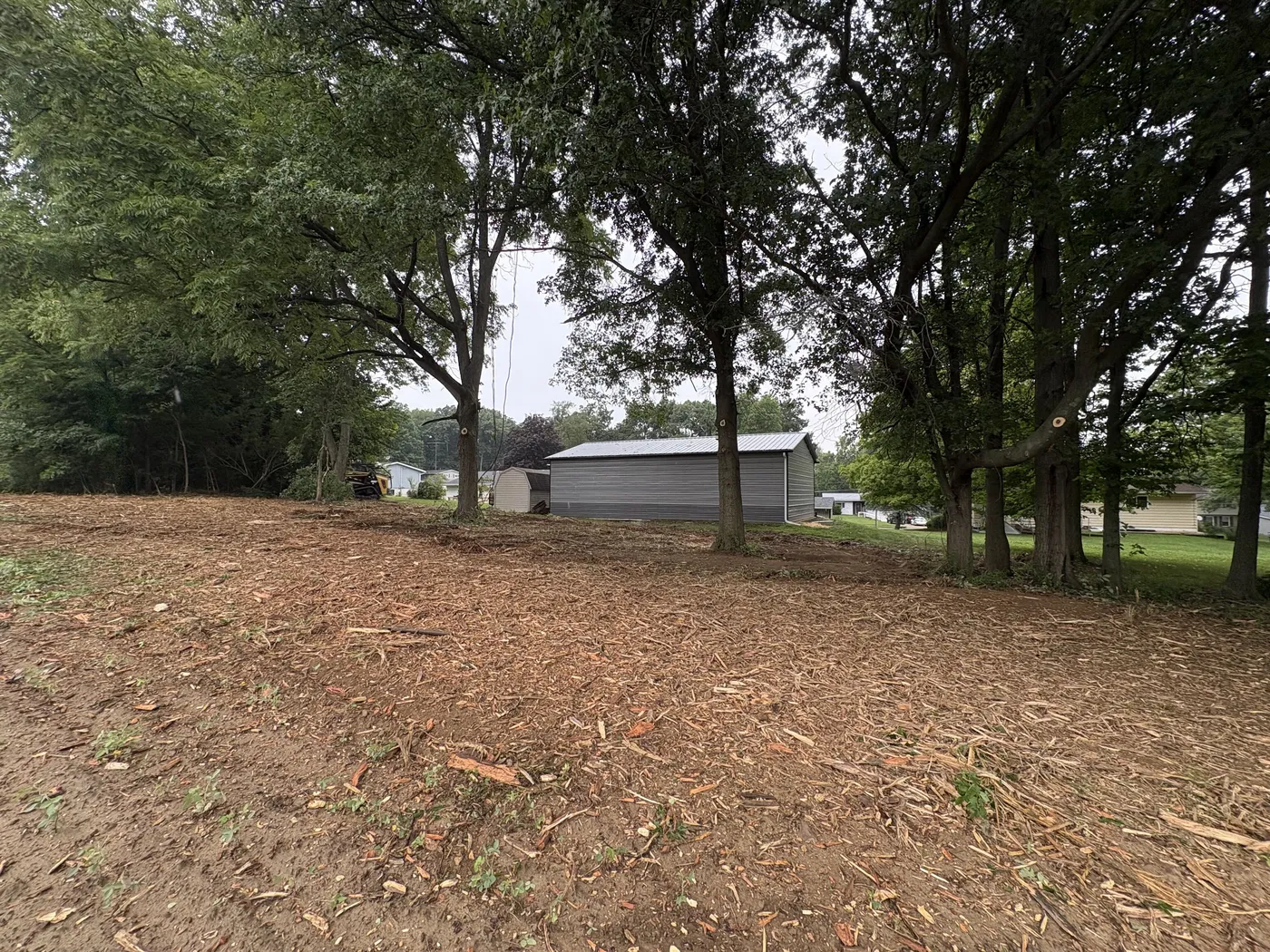
Forestry mulching grinds standing brush and trees into a layer of wood chips right where they grew. Our tracked mulcher takes brush, briars, saplings and trees up to about 6 inches. It covers roughly half an acre to two acres a day, depending on density. Nothing is burned, piled or hauled off.
Roots and topsoil stay in place, so the ground is stable the day the crew leaves. Stumps end 1 to 2 inches below grade, so you can mow over them. Keeper trees get flagged first, and the crew works around them.
Stems of 6 to 10 inches go slower but are often workable, one at a time. Larger timber is tree service work. Most residential jobs run one to three days.
The tracked machine handles slopes, soft spots and steep ground better than wheeled gear. Late summer through winter is prime clearing season. Frozen or dry ground carries the machine cleanly. Wet spring clay is the one season the crew sometimes steers around.
Mulching has one limit. It does not stop regrowth by itself. A cleared field stays open with mowing or grazing afterward.
How do goats and forestry mulching compare side by side?
Goats treat brush a little at a time, season after season, and they need a fence, water and guarding. Forestry mulching treats it once, with nothing to build or tend on site. The table below lines the two up, using NRCS goat guidance and the way our crew runs the mulcher.
| Question | Goats | Forestry mulching |
|---|---|---|
| What happens to the brush | Leaves and bark get eaten, up to about 5 feet high | Ground into chips where it stood |
| How long it takes | 2 to 8 years of repeated browsing to kill brush (NRCS Minnesota) | Roughly half an acre to two acres a day |
| Stem sizes | Bushes, saplings and small trees within reach | Up to about 6 inches; 6 to 10 inches slower, one at a time |
| What the site needs | Fencing such as portable electric netting, water, protection from coyotes and dogs | Nothing built on site; keeper trees flagged first |
| Best season | Early season; browsing after August 15 does not control brush | Late summer through winter, on dry or frozen ground |
| Trees you keep | Saplings and small trees in the fence can lose bark | Flagged and worked around |
| What is left behind | Stripped stems, roots intact | A chip layer; stumps 1 to 2 inches below grade |
| What it costs | Quoted by the project; one Atlanta-area business posts $850 to $1,500 for average residential projects | Typical residential jobs land in the low thousands per acre; light brush costs far less than dense regrowth |
What do goats cost compared with forestry mulching?
Goat services quote by the project. One goat-grazing business near Atlanta, Georgia, posts average residential projects at $850 to $1,500, with a $650 job minimum. That figure is that business’s own Georgia rate. Typical residential mulching jobs land in the low thousands per acre, and light brush costs far less than dense regrowth.
That business builds each quote from the days it expects the goats to need. It adds a travel fee past 15 miles and a setup fee for a secure enclosure. It often offers lower prices in the winter months. It also says goats are often not cost effective on unfenced ground over 2 to 3 acres.
Keep in mind what a visit buys. NRCS counts brush control in seasons and years of browsing, so a goat budget tends to repeat. The same business sells monthly subscription plans to its maintenance customers.
Mulching is paid once for the reset, then mowing or grazing holds the ground. The details are in what forestry mulching costs in Ohio. We give a free written estimate after an on-site look. The price and timeline hold unless the scope changes.
Which brush jobs fit goats, and which fit mulching?
Let the goal decide. A one-time clearing of woody brush for a pasture, fence row, trail or building lot points to mulching. Years of upkeep on tender growth can point to goats, and so can ground no machine should run. The table sorts common jobs.
| Situation | Better fit | Why |
|---|---|---|
| Multiflora rose taking over a pasture | Forestry mulching, then mowing or grazing | One pass grinds it; a North Carolina goat study took four grazing seasons |
| A honeysuckle understory in a woodlot | Forestry mulching | Flagged keeper trees stay; goats can strip saplings and small trees in the same fence |
| A fence row grown into saplings | Forestry mulching, with chainsaws along wire that stays | Taller stems sit above the 5 feet goats can reach |
| Poison ivy and briars on a bank too steep for any machine | Goats | Both are goat favorites, and a herd browses where no machine should go |
| A wooded building lot | Forestry mulching | Opens in days; larger timber is tree service work |
| Keeping a cleared field open afterward | Mowing or goats | Mulching does not stop sprouts; mowing or browsing keeps them down |
| Land where you want livestock anyway | Goats | With fence, water and predator protection in place, goats can hold tender growth for years |
Honeysuckle shows the difference best. A woodlot understory grows up under trees you want to keep. Our honeysuckle and invasive brush removal grinds the shrub layer and leaves the flagged trees standing.
Grazing ground works the same way. Pasture reclamation clears the rose and saplings once, so the field can be mowed or grazed again.
Can goats and forestry mulching work together?
Yes, and NRCS guidance points that way. Missouri’s priority pasture method starts by knocking target plants down to the goats’ browsing level, by mechanical means if needed. A forestry mulcher does that step in one pass. Goats or mowing then work the low sprouts that come back.
The calendar fits too. Goats do their useful brush work before August 15, per the Minnesota guide. Mulching runs best from late summer through winter, on dry or frozen ground. So the machine can reset the ground in fall or winter, and browsing can follow the next spring.
Prefer mowing to livestock? A yearly brush hogging pass keeps a mulched field open. The full plan for grazing ground is in reclaiming an overgrown pasture.
When do goats make the most sense?
Goats make the most sense for upkeep on tender growth over several years. They also fit poison ivy and briars on ground a machine should stay off. If you want livestock on the land anyway, the herd can work on brush too. For a one-time reset of woody brush, the mulcher is faster.
Using goats to clear land means fence, water and predator protection every season they browse. NRCS counts the control in years.
If the goal is open ground this season, that is brush removal with a tracked mulcher. The machine grinds brush, briars and saplings down once and works around flagged keeper trees. If goats fit your ground better, a goat-grazing business is the right call.
Not sure which side your ground falls on? Call or text (614) 359-8762, or ask for a free written estimate. Our crew is based in Mansfield and works 75 miles out across north central Ohio.